 I believe we all want what's best for our kids and do our very best to provide them with the environment and opportunities to help them thrive. Many kids are lucky enough to be involved in extra-curricular activities including sports, drama, music and other hobbies. Through these activities, they learn valuable skills in self-discipline, teamwork, and stick-with-it-ness that will hopefully serve them well in their future endeavors.
That being said, if I could recommend families do only ONE thing to improve a their child's health, wellbeing and chances for success in the world, it would be the family meal. It seems almost too simple or old-fashioned to be my go-to advice, but common sense and science agree that making time to sit down and for a meal together empowers children for: - better academic performance - higher self-esteeem - greater sense of resilience - improved social and communication skills - lower risk of substance abuse - lower risk of teen pregnancy - lower risk of depression and suicide - lower risk of developing eating disorders - lower rates of obesity - improved sense of belonging Need some FREE & easy recipe ideas? Check out these One Pot Wonders from the Family Dinner Project. Slow cooker and Quick & Easy recipes from AllRecipes. Happy eating! Dr. V Kylie Vannaman MD is a Board-Certified Family Medicine Doctor in Kansas City who believes that trusting relationships and quality conversations are essential to providing outstanding primary care to one and all. Sign up today!
0 Comments
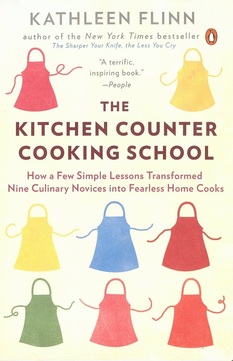 I love this book. In fact, many of my friends reading this blog will have a copy (paperback or audiobook version) that I gave them as a gift throughout the year following my first reading.
So, what's so great about it? Well, where to start?! It's a book about food, but not in the way you think. It's a book about people and their (our) relationships with food. It's a book of great recipes (including a "No-Knead Artisan Bread for Busy People"), in fact, I store this book right along with my cookbooks in my kitchen. It's a book about the joy of learning something new and realizing the kitchen can be a source of inspiration, health and happiness for you and your family. The author explains that the book was, "Inspired by a supermarket encounter with a woman loading up on processed foods, I decided to use my culinary training to help nine novice cooks find their cooking confidence. The Kitchen Counter Cooking School takes these lessons and provides practical, healthy tips to boost your culinary self-confidence, and strategies to get the most from your grocery dollars, as well as simple recipes to get you cooking." Kathleen's goals with her books, website (www.cookfearless.com) and blog are to, "teach the world to cook, to foster a sense of confidence - no, more than that - the ability for people to once again be fearless in their kitchens". I know that my attitude about food and cooking changed immensely after reading this book and highly encourage everyone to check out this very enjoyable, informative read. Who knows, maybe you too will find yourself hosting a salt-tasting or knife skills party...be fearless! Bon appetit, Dr. V Dr. Vannaman is a Board Certified Family Medicine Doctor in Kansas City who believes that trusting relationships and quality conversations are essential to providing outstanding primary care to one and all. Sign up today! 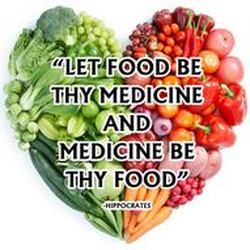 Hippocrates was on to the root of something (no pun intended) when he made his famous quote, "Let food be thy medicine and medicine be thy food." Another well-known author and food-writer, Michael Pollan made an equally poignant statement in the opening of his book, In Defense of Food: an eater's manifesto, when he declares "the secret" revealed in all his years of research and writing about food and health.
Eat food. Not too much. Mostly plants. His book then goes on to describe the transition of Americans going from thinking about food in the way of, well, FOOD to thinking about food in the way of "nutrients". He describes how in order to avoid angering the meat and dairy industries by suggesting people cut back on those foods, governmental agencies instead advised Americans to "decrease their intake of saturated fats". Gradually over time, we became increasingly obsessed with the labels on the boxes with their nice tables of nutritional information. Calories, fat grams, carbohydrates, fiber, vitamins, etc were all there to be counted and compared. Personally, I know many people who shy away from eating fresh fruits and vegetables because there isn't a label describing their exact nutritional data. Unfortunately, in our attempts to eat healthier, we exchange common sense for the current professional advice of the time. In John Harvey Kellogg's day, protein was the enemy, which led to his zeal for vegetarianism and regular enemas at his Battle Creek Sanitarium (side note: if you are one for satire, check out the 1994 movie "The Road to Wellville"). More recently fats have been the enemy, particularly in regards to cardiovascular disease, however these assumptions have been repeatedly challenged and now, "the lipid hypothesis is quietly melting away...(as we) come to the unavoidable conclusion that the emperors of nutrition have no clothes and we'll never listen to them again." writes Michael Pollan (In Defense of Food, chapter 5). Meanwhile, Dr. Atkins and others proclaim that carbohydrates are the true enemy and many people (celiac or not) are delving into the gluten-free mantra. I agree that many people feel better on a gluten-free diet, but I am skeptical whether this is because they are avoiding gluten per se, or all the other low-quality carbohydrates found in processed foods. By now, if you're like me, you've made yourself dizzy in trying to follow all these rules. So, what now? Again, I think Michael Pollan sums it up nicely: Michael Pollan's 7 Rules for Eating:
#6 is my favorite...and the topic of another blog... To your health! Dr. V Dr. Vannaman is a Board Certified Family Medicine Doctor in Kansas City who believes that trusting relationships and quality conversations are essential to providing outstanding primary care to one and all. Sign up today! |
Archives
January 2021
Categories
All
|

 RSS Feed
|
Clinic Hours
Monday-Thursday 9am-5pm Friday 9am - 12pm Closed for lunch 12-1pm daily CONTACT US!
7199 W 98th Terrace, Suite 110 Overland Park, KS 66212 Bldg #3 in Windmill Village phone:: 913-948-7652 fax: 913-273-2474 [email protected] |
Physician office hours:
Dr. Groves: Mon, Wed, Thurs 9am-5pm, Tues & Fri 9am-12pm Dr. Teegarden: Mon-Wed 9am-5pm. Thurs & Fri 9am-12pm Dr. Vannaman: Mon, Tues, Thurs 9am-5pm. Wed & Fri 9am-12pm Dr. Willnauer: Mon-Thurs 9am-5pm & Fri 9am-12pm |
2024 Holidays - Clinic CLOSED
New Year's Day - Jan 1 MLK Day - Jan 15 President's Day - Feb 19 Memorial Day - May 27 Annual staff retreat - June 13-14 Juneteenth - June 19 Independence Day - July 4, 5 Labor Day - Sept 2 Veteran's Day - Nov 11 Thanksgiving - Nov 28, 29 Christmas - Dec 24, 25, 26 |